
Best Manure Forks for Horse Stalls (2026): Shavings, Pellets and Straw
The best manure fork for horse stalls: plastic shavings forks, steel stall forks and forged manure forks compared on head width, tines, handle and bedding type.
Affiliate disclosure: product links on this page go to Amazon or to the maker's own store. As an Amazon Associate we earn from qualifying purchases, at no extra cost to you; links to makers' own stores earn us nothing. No retailer or brand sees our picks before they are published or has any say in them. How we choose.
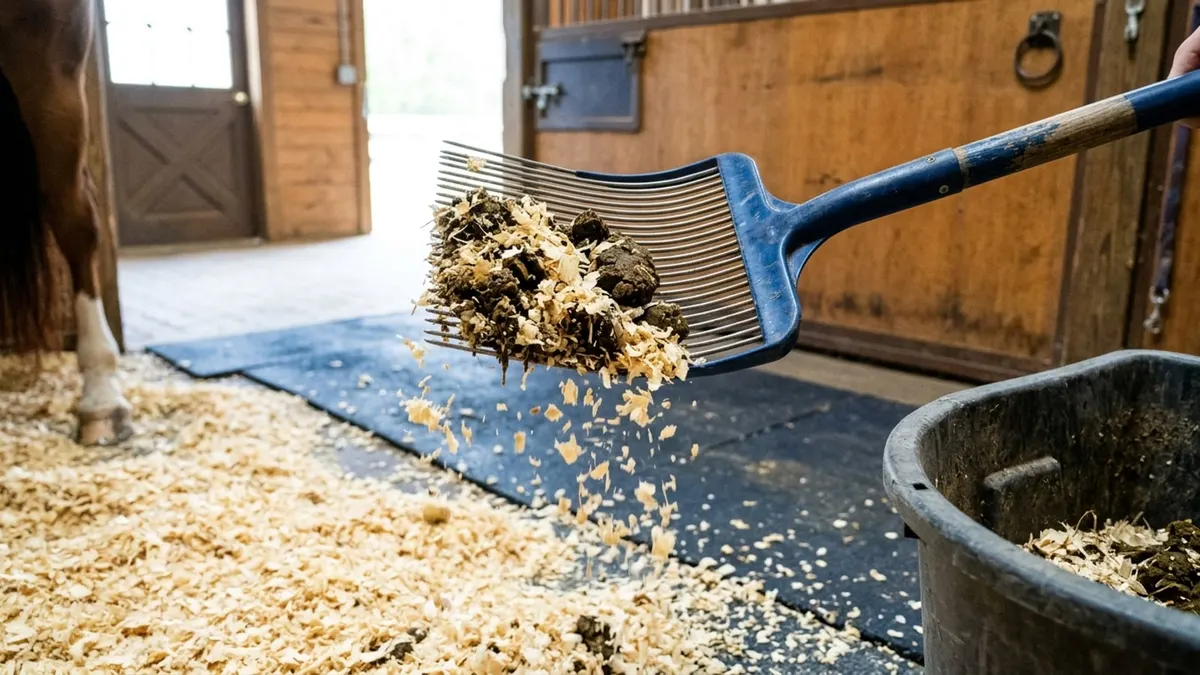
For a stall bedded on shavings or pellets, the manure fork to buy is a wide plastic head with many close tines on a long handle, and the VEVOR 18-tine manure fork is our pick: an 18 angled tine head about 15.75 by 13.19 inches on a 49 inch fiberglass handle, 61 inches long overall and 2.56 lb, per VEVOR. It lifts droppings and lets clean bedding fall back through.
The Jeffers 18-tine fork is the cheaper plastic option from a tack catalog that makes its own. For straw bedding or heavy, wet loads, a steel fork does the job plastic cannot: the Bully Tools stall fork for stalls, and the A.M. Leonard forged 6-tine for the manure pile.
Picks are based on the makers' own specs (head size, tines, handle, weight, warranty) and extension figures for how much waste a stall produces.
Our top picks at a glance
1. Best overall for shavings and pellets
VEVOR Manure Fork (18 angled tines, 61 in)Head: 15.75 x 13.19 in, plastic · Tines: 18, angled · Overall length: 61.02 in (49.21 in fiberglass handle) · Weight: 2.56 lb
- Jeffers 18-Tine Manure Fork (48 in handle)
Head: Plastic scoop head (per the Amazon listing) · Tines: 18, tempered polystyrene (per the Amazon listing) · Overall length: 48 in steel handle (per the Amazon listing) · Weight: Not stated
- Bully Tools Heavy Duty Stall Fork (all-steel D-grip, 38 in)
Head: 14.5 x 11 in, tempered steel tines · Tines: Steel, count not stated by Bully · Overall length: 38 in (D-grip) · Weight: 3.75 lb
- A.M. Leonard Forged 6-Tine Manure Fork (54 in ash handle)
Head: 12.5 x 10 in, forged steel, scooped · Tines: 6, oval, pointed · Overall length: 66.5 in (54 in ash handle) · Weight: 4.76 lb shipping weight
| Pick | Head | Tines | Overall length | Weight | Buy |
|---|---|---|---|---|---|
| VEVOR Manure Fork (18 angled tines, 61 in)Best overall for shavings and pellets | 15.75 x 13.19 in, plastic | 18, angled | 61.02 in (49.21 in fiberglass handle) | 2.56 lb | Amazon |
| Jeffers 18-Tine Manure Fork (48 in handle)Best budget | Plastic scoop head (per the Amazon listing) | 18, tempered polystyrene (per the Amazon listing) | 48 in steel handle (per the Amazon listing) | Not stated | Amazon |
| Bully Tools Heavy Duty Stall Fork (all-steel D-grip, 38 in)Best steel stall fork | 14.5 x 11 in, tempered steel tines | Steel, count not stated by Bully | 38 in (D-grip) | 3.75 lb | Amazon |
| A.M. Leonard Forged 6-Tine Manure Fork (54 in ash handle)Best for the manure pile | 12.5 x 10 in, forged steel, scooped | 6, oval, pointed | 66.5 in (54 in ash handle) | 4.76 lb shipping weight | Amazon |
Best overall for shavings and pellets
VEVOR Manure Fork (18 angled tines, 61 in)
A wide, close-tined plastic head on a long fiberglass handle: the right shape for sifting shavings and fluffed pellets with the least bending.
- Head
- 15.75 x 13.19 in, plastic
- Tines
- 18, angled
- Overall length
- 61.02 in (49.21 in fiberglass handle)
- Weight
- 2.56 lb
Pros
- At 61 inches overall it is the longest fork here, so you can work a stall standing nearly upright
- Fiberglass handle with a reinforced head joint that does not loosen, per the listing
- Light at 2.56 lb, which adds up over several stalls a day
Cons
- VEVOR does not publish the tine spacing, so very fine pellet sawdust may still slip through
- Not for digging or prying, per VEVOR, and plastic heads are the part that breaks first
- VEVOR's page gives no warranty term
A shavings fork works by catching droppings on the tines while loose bedding falls through. VEVOR's version has 18 angled tines on a head 15.75 inches long and 13.19 inches wide, on a 49.21 inch fiberglass handle for a total length of 61.02 inches, and weighs 2.56 lb, per VEVOR's product page. The angled tines are meant to cradle a load so less spills on the way to the muck tub.
It suits shavings and pellets once they have been wetted and broken down into fluff, the way pellet bedding is used. The fact sheet on pellet bedding from the Bay Area Resource Conservation Districts describes exactly this routine: pick out the manure and only the urine-soaked spots with a manure fork, and leave the rest. VEVOR does not publish tine spacing, so if your pellet bedding is very fine, expect some loss through the head.
Skip it for straw. Long straw stalks drape over plastic tines and mat together, and a head built for sifting is not built for lifting a wet, matted forkful. Use one of the steel forks below. VEVOR says the fork is not for digging; do not use it to chip frozen manure off a mat.
Best budget
Jeffers 18-Tine Manure Fork (48 in handle)
A complete 18-tine plastic fork from Jeffers, with a 48 inch metal handle and rubber grip, for owners who want a spare fork for every barn.
- Head
- Plastic scoop head (per the Amazon listing)
- Tines
- 18, tempered polystyrene (per the Amazon listing)
- Overall length
- 48 in steel handle (per the Amazon listing)
- Weight
- Not stated
Pros
- Comes complete with the handle, rubber grips and hardware, per the listing
- Jeffers also sells the head alone, and a 12-tine version, per the listing
Cons
- Jeffers' product page did not load for us, so every figure here is from the listing
- A 48 inch handle means more stooping than the VEVOR's 61 inch fork
- Jeffers backs it with a 90-day guarantee against defects, per the listing, far shorter than the steel forks
Jeffers is a farm and tack catalog that sells its own line of stable tools, and this is its full manure fork: an 18-tine head of tempered black polystyrene on a 48 inch steel handle with rubber grips, with the hardware to put it together, per the Amazon listing. The listing also offers a 12-tine version and heads without a handle, so a broken head is a cheap replacement rather than a new fork.
It does the same job as the VEVOR for shavings and fluffed pellets, on a shorter handle. We could not load Jeffers' own product page while researching this guide, so the specs are the listing's, and the listing gives a 90-day guarantee against manufacturing defects. Buy it as the spare fork or the second barn's fork; buy the VEVOR if one fork does all your stalls.
Best steel stall fork
Bully Tools Heavy Duty Stall Fork (all-steel D-grip, 38 in)
Tempered steel tines that do not bend under wet straw or packed manure, on a short all-steel D-grip for control in a tight stall.
- Head
- 14.5 x 11 in, tempered steel tines
- Tines
- Steel, count not stated by Bully
- Overall length
- 38 in (D-grip)
- Weight
- 3.75 lb
Pros
- Made in the USA from US steel, per Bully Tools, with a powder coat finish against rust
- Steel tines handle straw, hay and heavy wet manure that would flex a plastic head
- Bully Tools lists it at $47.99, and the listing gives a limited lifetime warranty
Cons
- 38 inches overall is short; expect to bend more than with a long-handled fork
- Steel tines can score rubber mats if you scrape with them
- Bully does not publish tine count or spacing
Bully Tools makes this stall fork in Steubenville, Ohio, from US steel, with tempered tines on a 14.5 by 11 inch head and a powder coat finish, per its product page. The version we link is the all-steel D-grip at 38 inches overall and 3.75 lb; Bully also makes a 58 inch fiberglass-handle version.
Steel is the reason to buy it. Straw bedding is long and mats together when wet, and a heap of wet straw and manure is heavier than a plastic head is built to lift. A steel fork carries it without flexing. The short D-grip gives leverage and control when you are working into a corner of a box stall or loading a muck cart, at the cost of bending more than a 5 ft fork.
On matted stalls, lift rather than scrape: hard steel tines dragged across rubber can score the surface. For shavings and pellets, the plastic forks above sift better.
Best for the manure pile
A.M. Leonard Forged 6-Tine Manure Fork (54 in ash handle)
A one-piece forged 6-tine head on a 54 inch ash handle, for turning the manure pile, moving straw and loading a spreader.
- Head
- 12.5 x 10 in, forged steel, scooped
- Tines
- 6, oval, pointed
- Overall length
- 66.5 in (54 in ash handle)
- Weight
- 4.76 lb shipping weight
Pros
- One-piece forged, heat-treated head that A.M. Leonard says holds its shape for years
- Covered by A.M. Leonard's lifetime warranty, per its product page
- The longest reach here at 66.5 inches, for working into the middle of a pile
Cons
- Six wide-spaced tines lose shavings and pellets straight through; not a stall-picking fork for those beddings
- The heaviest fork here
- A.M. Leonard lists it at $60.94, the most expensive pick
A.M. Leonard's forged steel manure fork has six oval, pointed tines on a one-piece head 12.5 inches long and 10 inches wide, with a distinct scoop, on a 54 inch straight ash handle for 66.5 inches overall. The head is heat-treated and tempered, and A.M. Leonard covers it with its lifetime warranty.
It is the fork for the jobs after the stall. A.M. Leonard lists compost, mulch and straw among its uses, and the sharp tines go into a packed manure pile where a plastic fork would bounce off. Penn State Extension estimates each stall produces about 60 to 70 pounds of manure and soiled bedding a day, so a one-horse barn piles up roughly a ton every month; this is the fork for turning and loading that pile.
Do not use it to pick a shavings stall: six wide-spaced tines let the clean bedding and small droppings fall straight through.
How we chose
The right fork depends on your bedding, so we matched forks to shavings, pellets, straw and the manure pile, then compared each on the maker's published head size, tine count and material, handle length and material, weight and warranty.
Match the fork to the bedding
| Bedding or job | Fork type | Why | Pick |
|---|---|---|---|
| Shavings | Plastic, many close tines, wide head | Sifts clean bedding back into the stall | VEVOR 18-tine or Jeffers 18-tine |
| Pellets (fluffed) | Plastic, the closest tines you can find | Fluffed pellets are fine like sawdust | VEVOR 18-tine |
| Straw | Steel tines | Long stalks drape over plastic tines; wet straw is heavy | Bully Tools stall fork |
| Manure pile, spreader, compost | Forged steel, few sharp tines | Penetrates a packed pile | A.M. Leonard 6-tine |
Pellet bedding changes the routine more than the fork. The Bay Area Resource Conservation Districts' fact sheet on pellet bedding says to wet the pellets so they fluff, then remove only manure and urine-soaked spots with a manure fork, and that picking manure out of fluffed pellets is easier than out of shavings. Our pellets vs shavings comparison covers the rest of that difference, including the cost per week.
What matters in a manure fork
Head width
A wider head covers more of the stall per pass and carries more per trip. The plastic picks here are the widest, around 13 to 15.75 inches; the forged fork is 10 inches wide, which is plenty for stabbing into a pile and less weight to lift when loaded.
Tines: count, spacing and material
More tines, closer together, keep more bedding in the stall. Few makers publish tine spacing, so judge by count and head width: 18 tines across a 13 to 15 inch head are close; 6 tines across 10 inches are not. Plastic tines flex and sift; steel tines lift weight without bending. Angled or scooped heads cradle the load.
Handle length and grip
Handle length decides how much you bend. The forks here run from 38 inches (Bully's D-grip) to 66.5 inches (A.M. Leonard). A long straight handle suits picking a stall standing up; a short D-grip suits tight corners and loading a cart. Fiberglass and steel handles do not rot; wood is lighter in the hand and can be replaced.
Weight and repairs
You lift the fork hundreds of times a week, so a pound matters. Plastic heads usually wear out before handles, so a fork whose head is sold on its own, like the Jeffers, costs less to keep. Steel forks last longest; Bully and A.M. Leonard both describe lifetime coverage.
How much you are moving
Rutgers' Equine Science Center puts a stalled horse's bedding use at 8 to 15 pounds a day and the combined manure and bedding at 2 to 3 cubic feet a day, and Penn State Extension estimates 60 to 70 pounds of waste removed per stall daily. That is why fork weight, handle length and a good tub or cart matter: our muck bucket and cart guide sizes the container for that load.
On matted stalls, lift rather than scrape, and pick wet spots down to the mat so urine does not sit on the rubber; our stall mat guide explains why textured, grooved mats are easier to keep clean.
The picks side by side
| Fork | Head | Tines | Handle | Overall | Best for |
|---|---|---|---|---|---|
| VEVOR 18-tine | 15.75 x 13.19 in plastic | 18 angled | Fiberglass | 61.02 in | Shavings, pellets |
| Jeffers 18-tine | Plastic scoop (listing) | 18 polystyrene (listing) | 48 in steel (listing) | Not stated | Shavings, spare fork |
| Bully Tools stall fork | 14.5 x 11 in steel | Steel (count not stated) | All-steel D-grip | 38 in | Straw, heavy wet loads |
| A.M. Leonard 6-tine | 12.5 x 10 in forged | 6 oval | 54 in ash | 66.5 in | Manure pile, compost |
What to skip
- Three-tine hay forks for stall cleaning. They are for pitching loose hay; droppings and bedding fall straight through.
- Forks with no replacement head if you pick several stalls a day; plastic heads wear out first.
- Prying frozen manure off mats with a plastic fork. Use a flat shovel or a steel scraper.
Frequently asked questions
What is the best manure fork for shavings?
A wide plastic fork with many close tines on a long handle, such as the VEVOR 18-tine at 61 inches overall. The tines catch droppings while loose shavings fall back into the stall, so you throw out less clean bedding.
What kind of fork do you use for pellet bedding?
A plastic fork with the closest tines you can find. Pellets are wetted so they fluff into a fine bedding, and the usual routine is to lift out only manure and urine-soaked spots. Wide-spaced steel forks lose most of the fluffed bedding through the tines.
Is a metal or plastic manure fork better?
Plastic for shavings and pellets, because many flexible tines sift bedding. Steel for straw, heavy wet loads and the manure pile, because steel tines lift weight without bending. Many barns keep one of each.
How long should a manure fork handle be?
Long enough to pick a stall without stooping: the long-handled forks here run 61 to 66.5 inches overall. Short D-grip forks, around 38 inches, give more control in corners and when loading a cart but mean more bending.
What is the difference between a manure fork and a pitchfork?
A pitchfork has two to four long tines for moving loose hay. A manure fork has more tines, closer together, and often a scooped or basket head, so it holds droppings and lets bedding fall through. Forged six-tine manure forks sit between the two.
Sources
- VEVOR Manure Fork, 18 Angled Tines, Horse Manure Rake with Long Fiberglass Handle, VEVOR
- Heavy Duty Stall Fork, Bully Tools
- Forged 6-Tine Steel Manure Fork with 54in Straight Handle, A.M. Leonard
- Horse Manure Management: Bedding Use (FS537), Rutgers Equine Science Center
- Horse Stable Manure Management, Penn State Extension
- The Benefits of Wood Pellet Bedding at Horse Facilities, Council of Bay Area Resource Conservation Districts
Cover image: Illustration: Barn Gear Review (AI-generated)
Related guides
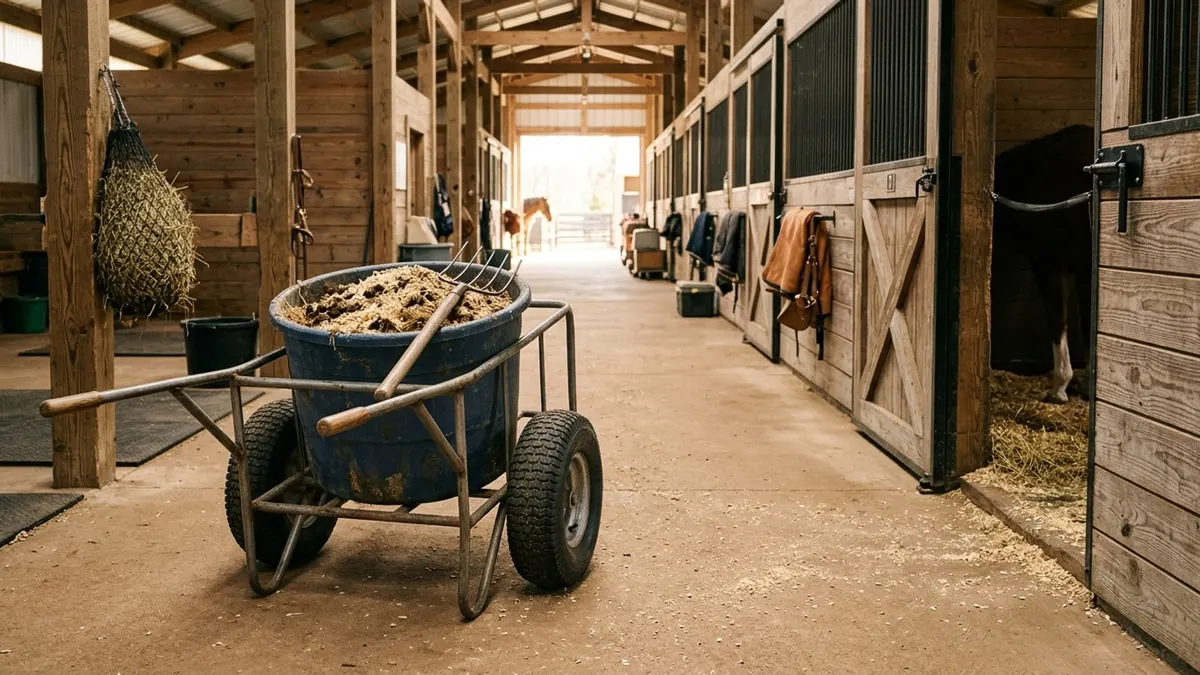
Best Muck Buckets and Muck Carts for Horse Barns (2026)
Muck tubs and carts sized against the 2.4 cubic feet of waste a stall makes each day, with capacity, load rating, wheels and handles compared.
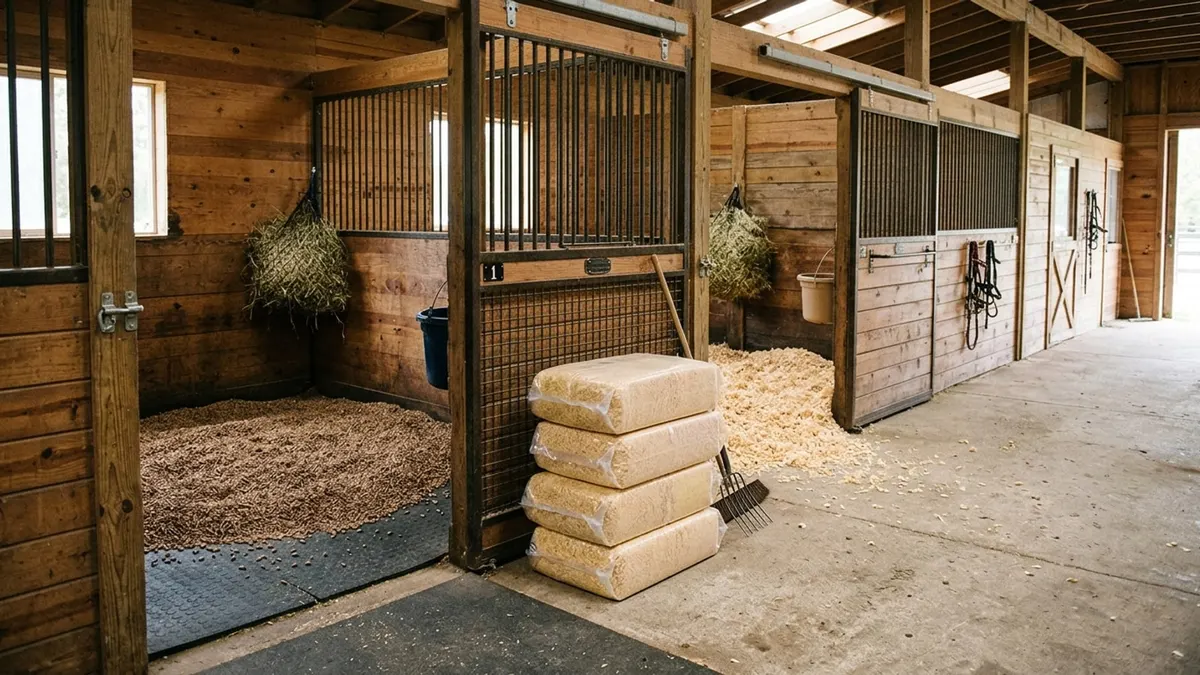
Horse Bedding Pellets vs Shavings: Absorbency, Dust and Cost per Week
Pellets and shavings compared on absorbency, dust, stall waste and weekly cost, with the arithmetic shown and the break-even price that decides it.
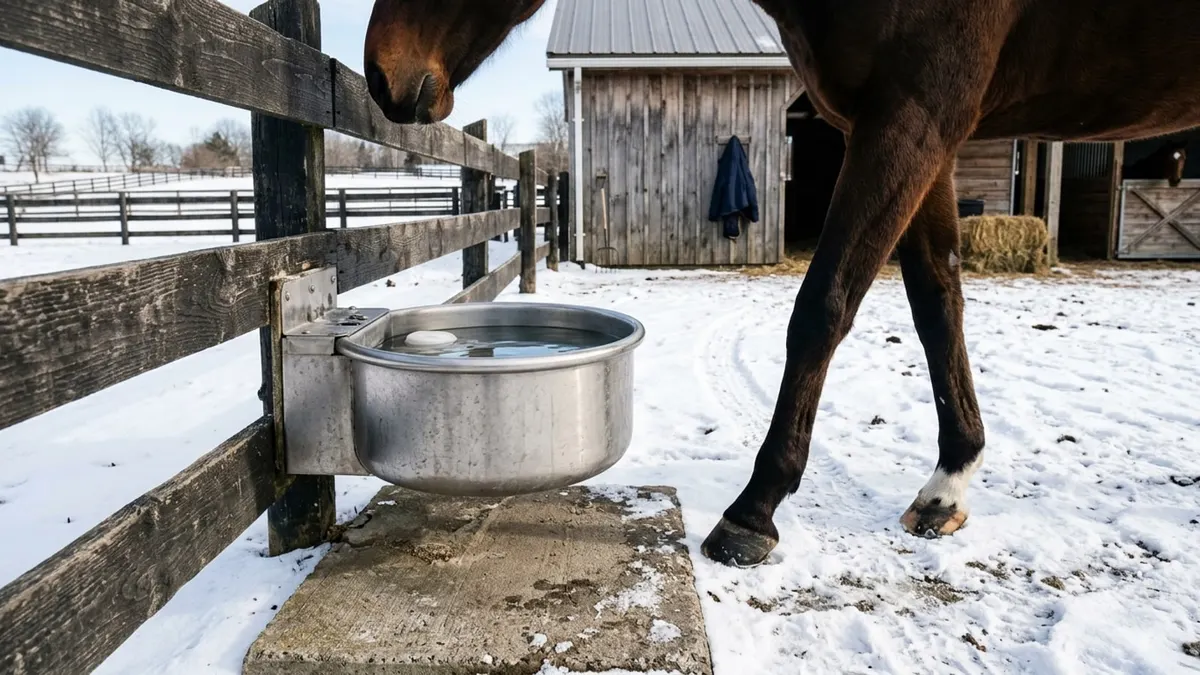
Best Automatic Horse Waterers (2026): Heated, Frost-Free and Float Valve
Four automatic waterers, from a stall-wall Nelson to a no-electricity Bar-Bar-A, compared on heater watts, horses served, installation and what each needs from a plumber and electrician.