
Best Saddle Soap and Leather Cleaners for Tack (2026)
The best saddle soap for tack in 2026: glycerine sprays, classic paste, a two-step cleaner and conditioner, and what each maker says not to use it on.
Affiliate disclosure: product links on this page go to Amazon or to the maker's own store. As an Amazon Associate we earn from qualifying purchases, at no extra cost to you; links to makers' own stores earn us nothing. No retailer or brand sees our picks before they are published or has any say in them. How we choose.
Farnam Leather New Glycerine Saddle Soap is the saddle soap we would keep in the tack room. It is a liquid glycerine soap in a spray bottle that cleans and conditions in one pass, Farnam says to use it after every ride, and it comes in refill sizes up to 64 oz.
Liquid glycerine is also what University of Florida extension specialists reach for: their tack care guide says to scrub with a good liquid glycerin saddle soap, and warns that bar and cake soaps build up in tooling and stitching. For a heavy clean on work tack, Fiebing's Saddle Soap paste still has a place, and for a proper clean-then-condition routine, Lexol's two-step kit splits the jobs.
We compared cleaners on what each maker says the product is for, how to apply it and what not to use it on.
Our top picks at a glance
- Farnam Leather New Glycerine Saddle Soap Spray (16 oz)
Form: Liquid spray · What it does: Cleans, softens and shines in one step · Size: 16 oz (32 and 64 oz on Farnam's site) · Best for: Daily wipe-down of saddles and bridles
2. Best paste for heavy cleaning
Fiebing's Saddle Soap Paste (5 lb tub, white)Form: Paste · What it does: Cleans and conditions · Size: 5 lb tub (3.5 and 12 oz tins on Fiebing's site) · Best for: Dirty work saddles, boots and harness
3. Best cleaner and conditioner kit
Lexol Two-Step Leather Cleaner and Conditioner Kit (8 oz each)Form: Two bottles, two sponges · What it does: Cleans, then conditions · Size: 8 oz each · Best for: A thorough clean-then-condition a few times a year
- Tack Butter Natural Leather Wash
Form: Liquid wash, spray bottle · What it does: Cleans; pair with a conditioner · Size: 20 fl oz (per the Amazon listing) · Best for: Riders who want a short ingredient list
5. Best for show-day touch-ups
Farnam Leather New Foam Saddle Soap (7 oz)Form: Pump foam · What it does: Cleans, conditions and shines in one step · Size: 7 oz · Best for: Show-day touch-ups and travel
| Pick | Form | What it does | Size | Best for | Buy |
|---|---|---|---|---|---|
| Farnam Leather New Glycerine Saddle Soap Spray (16 oz)Best overall | Liquid spray | Cleans, softens and shines in one step | 16 oz (32 and 64 oz on Farnam's site) | Daily wipe-down of saddles and bridles | Amazon |
| Fiebing's Saddle Soap Paste (5 lb tub, white)Best paste for heavy cleaning | Paste | Cleans and conditions | 5 lb tub (3.5 and 12 oz tins on Fiebing's site) | Dirty work saddles, boots and harness | Amazon |
| Lexol Two-Step Leather Cleaner and Conditioner Kit (8 oz each)Best cleaner and conditioner kit | Two bottles, two sponges | Cleans, then conditions | 8 oz each | A thorough clean-then-condition a few times a year | Amazon |
| Tack Butter Natural Leather WashBest plant-oil wash | Liquid wash, spray bottle | Cleans; pair with a conditioner | 20 fl oz (per the Amazon listing) | Riders who want a short ingredient list | Amazon |
| Farnam Leather New Foam Saddle Soap (7 oz)Best for show-day touch-ups | Pump foam | Cleans, conditions and shines in one step | 7 oz | Show-day touch-ups and travel | Amazon |
A spray-on liquid glycerine saddle soap that cleans and conditions after every ride without leaving a greasy film.
- Form
- Liquid spray
- What it does
- Cleans, softens and shines in one step
- Size
- 16 oz (32 and 64 oz on Farnam's site)
- Best for
- Daily wipe-down of saddles and bridles
Pros
- Liquid glycerine, the type UF/IFAS Extension recommends for scrubbing tack
- Farnam says it is gentle enough for daily use and should be used after every ride
- Farnam says it will not dull, stain or leave a greasy residue, and does not rub off on riding pants
Cons
- Farnam's label says not to use it on suede, rough-out or very light shades of leather, and that it may darken some leathers
- Not a deep conditioner; Farnam pairs it with a separate conditioner for dry leather
Farnam's directions are simple: brush or vacuum off dust and dirt, spray the soap onto the leather without letting it run, rub it in with a soft cloth that has enough nap to reach into stitching and carving, keep rubbing until the foam disappears, then polish with a clean dry cloth. Farnam also says to use it on wet leather to keep it from stiffening. It sells 16, 32 and 64 oz sizes; the 64 oz refills the spray bottle.
The label's caution panel is worth reading before you start: do not use it on suede, rough-out or very light shades of leather, or on leather clothing or furniture, and test a hidden spot because it may darken some leathers. If you show a pale western saddle, that rules it out for the skirts.
Farnam treats this as step one of two. Step two on its label is its Leather New Deep Conditioner and Restorer, used when leather needs softness and pliability restored. For an everyday saddle, the soap after each ride and a real conditioner a few times a year follows the clean-then-condition order UF/IFAS describes.
Best paste for heavy cleaning
Fiebing's Saddle Soap Paste (5 lb tub, white)
The classic saddle soap paste, in a barn-size tub, for scrubbing mud and sweat out of work tack.
- Form
- Paste
- What it does
- Cleans and conditions
- Size
- 5 lb tub (3.5 and 12 oz tins on Fiebing's site)
- Best for
- Dirty work saddles, boots and harness
Pros
- Fiebing's says it cleans leather and lubricates the fibers to prevent brittleness
- Made for smooth leather: saddlery, boots and shoes, per Fiebing's
- Fiebing's says neither its yellow nor white paste transfers color
Cons
- Paste soaps build up in tooling and stitching and are harder to rinse clean, per UF/IFAS Extension
- A 5 lb tub is a lot of soap for one saddle
Fiebing's calls Saddle Soap its signature product and says it cleans leather while lubricating the fibers to keep it from going brittle. Its directions: brush off loose dirt, dampen a sponge until it is damp but not dripping, work up a lather on the soap and rub it into the leather in small circles, wipe off the residue with a clean damp cloth, and let the leather air dry completely before you apply any conditioner. Fiebing's also says to test a small hidden area first and not to scrub too hard on delicate or unfinished leather.
Fiebing's sells the paste in 3.5 oz, 12 oz and 5 lb sizes in yellow, white and black, listed from $6.00 to $45.00 depending on size (prices change). Its FAQ explains that yellow was traditionally for saddles and white for boots, and that both clean and condition the same. The listing we link is the 5 lb white tub.
Use a damp sponge, not a wet one, and wipe well afterward, because UF/IFAS Extension notes that bar and cake soaps tend to build up in tooling and stitching. On a heavily tooled saddle, a liquid soap like Farnam's is easier to rinse. Fiebing's also makes a liquid glycerine saddle soap, in sizes from 4 oz to a gallon, for that job.
Best cleaner and conditioner kit
Lexol Two-Step Leather Cleaner and Conditioner Kit (8 oz each)
A separate cleaner and conditioner with two sponges, for owners who clean and then condition as two jobs.
- Form
- Two bottles, two sponges
- What it does
- Cleans, then conditions
- Size
- 8 oz each
- Best for
- A thorough clean-then-condition a few times a year
Pros
- Splits cleaning and conditioning, the order most saddlemakers follow, per UF/IFAS Extension
- Lexol says the conditioner uses fine oil droplets that restore flexibility and protect against cracking
- Kit includes 8 oz of each and two applicator sponges
Cons
- Lexol markets this kit for car interiors, furniture, shoes and jackets; its page does not mention tack
- Lexol suggests treating every 6 months, less often than a working saddle needs cleaning
Lexol's kit holds an 8 oz bottle of All Leather Deep Cleaner, an 8 oz bottle of All Leather Deep Conditioner and two sponges. Lexol says the cleaner lifts dirt and oils so they wipe away, and the conditioner's fine oil droplets nourish the leather and protect it against cracking. It suggests treating leather every 6 months.
Its fit for a barn is the routine, not the label. UF/IFAS Extension says most saddlemakers hold that leather must first be cleaned, allowed to dry, and then conditioned, rather than cleaned and conditioned in one process. A kit with two bottles makes that easy to do on a saddle's thorough clean a few times a year, with a one-step soap like Farnam's for the days in between.
Be honest with yourself about the marketing: Lexol sells this for car seats and sofas, and its product page says nothing about saddles or bridles. Test it on a hidden spot of a valued saddle, as you would any new product.
Best plant-oil wash
Tack Butter Natural Leather Wash
A small-batch liquid leather wash with its full ingredient list published, for riders who want to know what goes on their tack.
- Form
- Liquid wash, spray bottle
- What it does
- Cleans; pair with a conditioner
- Size
- 20 fl oz (per the Amazon listing)
- Best for
- Riders who want a short ingredient list
Pros
- The maker publishes every ingredient, from water and organic coconut oil to lavender essential oil
- Tack Butter says it is gentle enough for everyday use and doubles as a hand wash at the barn
- Refill bags are sold for the spray bottle
Cons
- A cleaner only; the maker pairs it with its separate conditioner
- Small maker; size and the pH-balanced claim appear only on the Amazon listing
Tack Butter is made by Pixie Soaps, and its leather wash reads like a plant-oil soap. The maker lists the ingredients as water, organic coconut oil, potassium hydroxide, organic olive, castor, argan, jojoba and hemp seed oils, vegetable glycerin and lavender essential oil, and sells it at $24.00 in a spray bottle or a refill bag (prices change).
The maker says it is gentle enough for everyday use and should be followed by its conditioner. The Amazon listing adds a 20 fl oz size and calls it pH balanced; those two claims are not on the maker's page. If you avoid petroleum products on tack, a published ingredient list is the easiest way to check, which matters given UF/IFAS Extension's warning about neatsfoot compounds that contain heavy petroleum products.
Best for show-day touch-ups
Farnam Leather New Foam Saddle Soap (7 oz)
A pump foam version of Leather New that will not drip, for a quick clean and shine in the trailer.
- Form
- Pump foam
- What it does
- Cleans, conditions and shines in one step
- Size
- 7 oz
- Best for
- Show-day touch-ups and travel
Pros
- Foam will not drip or run, per Farnam, so it stays where you put it on a bridle or breastcollar
- Leaves a high-gloss shine, per Farnam
- Small bottle for a grooming tote or trailer
Cons
- A small bottle for daily barn use; the spray is better value for that
- Farnam's foam page does not list the leathers to avoid, so follow the cautions on the Leather New label
Leather New Foam is Farnam's pump-foam saddle soap. Farnam says it cleans, softens and preserves leather and leaves a long-lasting high-gloss shine, that it is good for hard-to-reach areas, and that it will not drip or run. Directions match the spray: brush off dust, apply the foam, rub it into stitching and carving with a soft cloth until the foam disappears, then polish.
It is the bottle to keep in the trailer for the five minutes before a class, when a quick wipe of the headstall and reins matters more than a deep clean. Farnam's foam page does not repeat the spray's caution about suede, rough-out and light leather, so treat those leathers the same way.
How we chose
A saddle soap's job is to lift sweat, dirt and grime out of leather without stripping it or leaving residue that holds dirt. We compared products on what each maker says it does (clean, condition or both), its directions, and what its label says not to use it on. For how to clean and condition, we followed UF/IFAS Extension's tack care guide for hot, humid climates.
Saddle soap, cleaner or conditioner
| Product type | What it does | When to use it |
|---|---|---|
| Liquid glycerine soap (Farnam spray, Fiebing's liquid) | Cleans with a light conditioning effect | After rides; scrubbing a dirty saddle |
| Paste saddle soap (Fiebing's) | Cleans and conditions | Heavy cleaning of smooth work leather; wipe residue well |
| Leather cleaner (Lexol cleaner, Tack Butter wash) | Cleans | Before a conditioner |
| Conditioner or oil | Puts back oils that cleaning removes | After the leather has dried; one to two coats |
UF/IFAS Extension calls it a misconception that leather can be cleaned and conditioned in one process, and says most saddlemakers clean, let the leather dry, then condition. One-step products like Leather New are fine for daily care; a dry saddle still needs a real conditioner afterward.
What to look for
Liquid or paste
UF/IFAS Extension says saddle soap comes in bar, cake and liquid forms, that bar and cake soaps tend to build up in tooling and stitching and are hard to rinse, and that liquid soaps are easier to apply and remove. That makes liquid glycerine the default for tooled western saddles. Paste still cleans heavily soiled smooth leather well if you wipe it off thoroughly.
What the label says not to use it on
Farnam's Leather New label rules out suede, rough-out and very light shades of leather, and leather clothing and furniture. Fiebing's says to test a hidden spot and not to scrub delicate or unfinished leather hard. UF/IFAS Extension suggests cleaning suede with a stiff plastic or brass brush, says suede typically does not need conditioning, and notes that light show saddles darken with oil and sunlight. Read the label before the bottle touches a pale or rough-out saddle.
The oil you finish with
UF/IFAS Extension's guidance on oils is the most useful part of its guide:
- Pure neatsfoot oil nourishes dry leather but mildews more readily than other oils in hot, humid weather.
- Some "neatsfoot compounds" contain heavy petroleum products and should be avoided.
- Corn and vegetable oils go rancid and tend to promote mold; avoid them on leather.
- One to two coats is usually enough. Too much oil breaks leather down, causes mildew and leaves residue on clothing.
- Oil darkens leather. Lexol-NF Leather Dressing is one of the few oils that does not, according to the guide.
A cleaning routine that works
- After each ride, wipe sweat off with a damp cloth, or use a one-step glycerine spray.
- Several times a year, take the saddle apart as far as practical and scrub each piece with liquid glycerine soap, a sponge or brush and water. UF/IFAS Extension says a light-pressure hose rinse is fine, but never submerge a saddle, because the tree can be damaged.
- Pay attention to the back of the fenders, the top of the stirrup leathers and the back of the riggings, which UF/IFAS Extension says take abuse and are often missed.
- Let the leather dry, then condition with one or two light coats.
- Check stress points as you go. Cracked leather in a stress area should be replaced, not oiled.
- Put the saddle back on a rack with air around it, and store it in a dry room; UF/IFAS Extension recommends a dehumidifier or air conditioner in humid months.
The same products clean the wear leathers on a western saddle pad. Store clean, dry bottles and sponges in a tack trunk so they are not knocked over in the aisle.
What to skip
- Kitchen oils. Corn and vegetable oil can go rancid and feed mold.
- Floor polish and wood lacquer. UF/IFAS Extension says they are hard to remove when the leather needs oil again and can crack in sunlight.
- Soaking. Never submerge a saddle.
- Home recipes. Stick to products whose makers say what they are for and what to keep them off.
Frequently asked questions
Is saddle soap a cleaner or a conditioner?
Mostly a cleaner. Fiebing's and Farnam both say their saddle soaps clean and condition, but the conditioning is light. UF/IFAS Extension says most saddlemakers clean, let the leather dry, and then condition separately, so a dry saddle still needs a conditioner after soap.
How often should I clean my saddle?
Wipe it down after rides and give it a thorough clean several times a year. UF/IFAS Extension describes a simple wipe-down for daily care and a full clean with some disassembly several times a year. Farnam says its Leather New spray can be used after every ride.
Can I use saddle soap on suede or rough-out leather?
Check the label first. Farnam's Leather New label says not to use it on suede or rough-out. UF/IFAS Extension suggests cleaning suede with a stiff plastic or brass brush and says suede usually does not need conditioning.
Will saddle soap darken my saddle?
It can. Farnam's label warns Leather New may darken some leathers and should not go on very light shades. Oil darkens leather too, according to UF/IFAS Extension. Fiebing's says its yellow and white pastes do not transfer color. Test any product on a hidden spot first.
What is the difference between yellow and white Fiebing's saddle soap?
Fiebing's says yellow was traditionally used for saddles and tack and white for shoes and boots, but neither transfers color and both clean and condition the same. Buy whichever size and color is easiest to get.
Can I use olive oil or vegetable oil on a saddle?
UF/IFAS Extension says to avoid corn and vegetable oils because they can go rancid and promote mold. It notes some saddlemakers use extra virgin olive oil, which penetrates well but does not soften leather as well as neatsfoot or good blended oils.
Is glycerine saddle soap better than paste?
For most tack, yes. UF/IFAS Extension recommends liquid glycerin saddle soap for scrubbing and says bar and cake soaps build up in tooling and stitching and are hard to rinse clean. Paste still works on smooth, heavily soiled leather if you wipe it off well.
Sources
- Leather New Easy-Polishing Glycerine Saddle Soap, Farnam
- Leather New Easy-Polishing Glycerine Saddle Soap label (item 32602), Farnam
- Leather New Foam, Farnam
- Saddle Soap, Fiebing's
- Liquid Glycerine Saddle Soap, Fiebing's
- Lexol Complete Two-Step Leather Regime 8 oz, Lexol
- Tack Butter Natural Leather Wash, Tack Butter (Pixie Soaps)
- Saddle and Tack Care in Hot and Humid Environments (AN303), UF/IFAS Extension
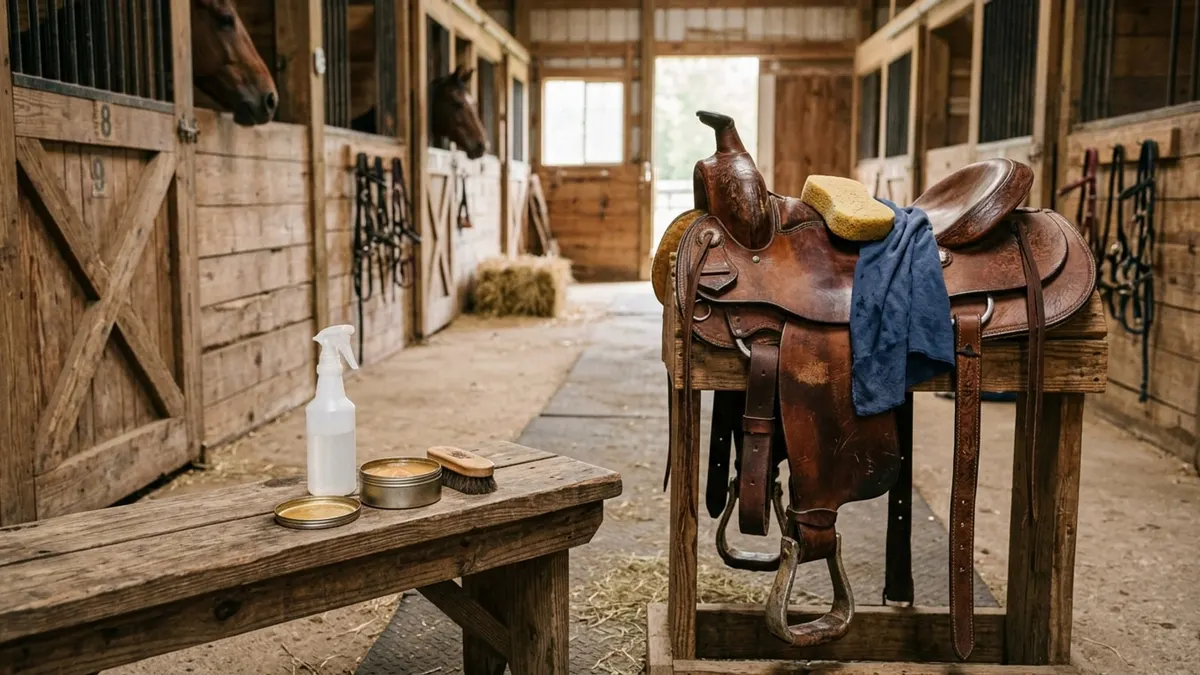
Cover image: Illustration: Barn Gear Review (AI-generated)
Related guides
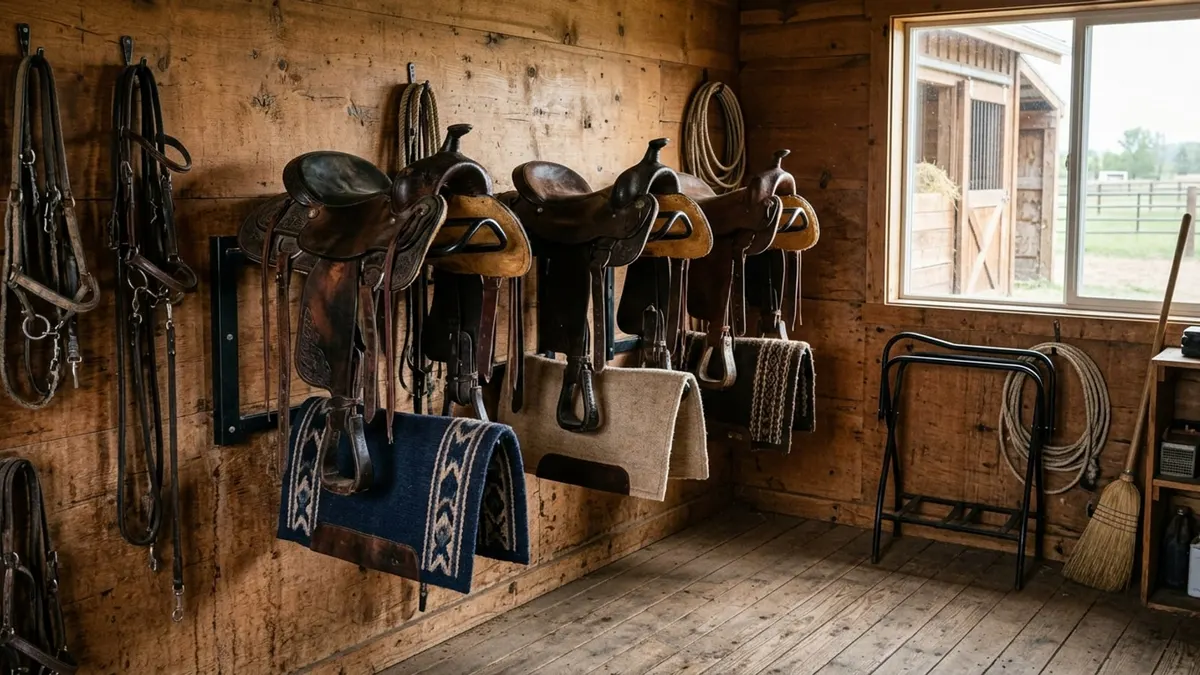
Best Saddle Racks and Saddle Stands of 2026
Five ways to get saddles off the floor, from a fold-flat stand for the trailer to a rotating three-arm tower and an eight-rack wall set, with the makers' load ratings where they publish one.
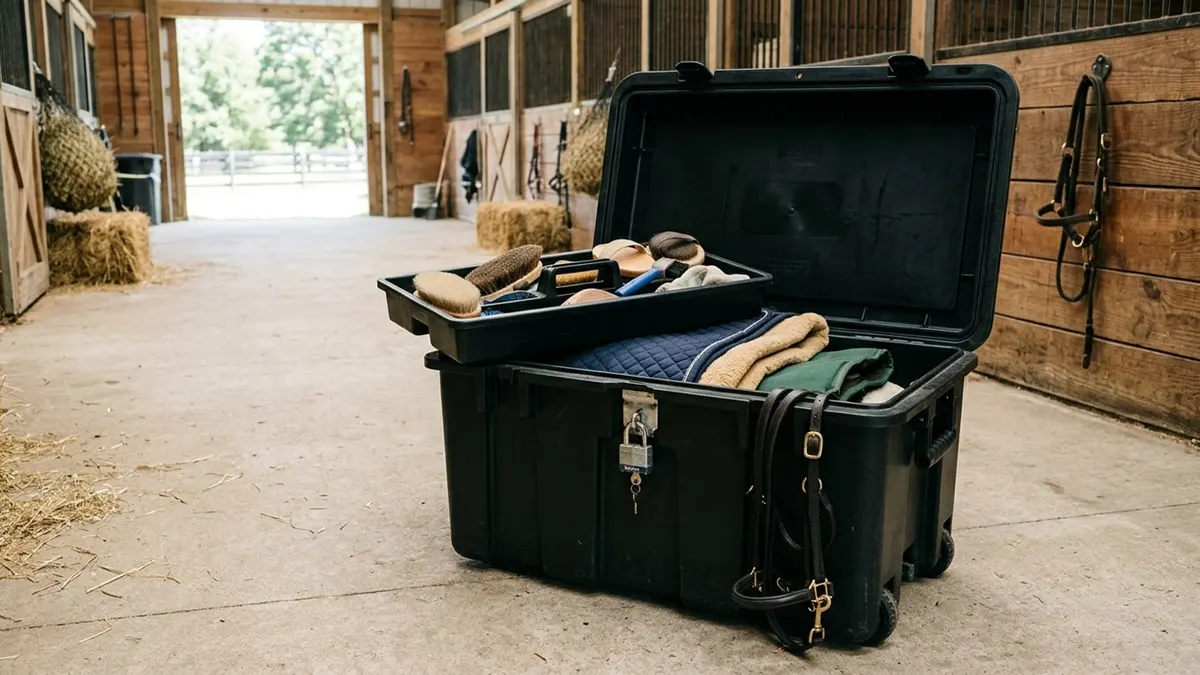
Best Tack Trunks and Tack Boxes of 2026
Four ways to lock up tack, from a poly trunk sized for an English saddle to Weaver's rolling aluminum show boxes, with the makers' own sizes, trays and list prices.
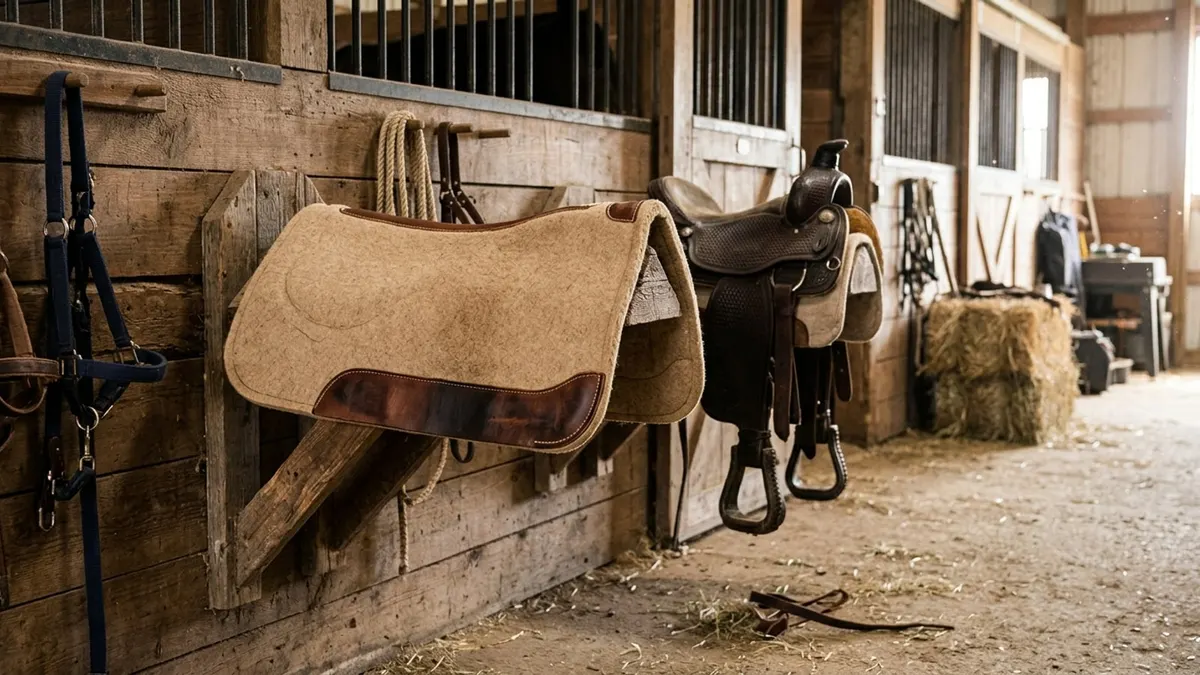
Best Western Saddle Pads of 2026
Six western pads from everyday wool felt to a built-up correction pad, compared on the makers' sizes, thickness and materials, plus the extension rule of thumb for withers clearance.